…. and Why It Matters
Picture this: Your baby becomes unresponsive. Panic sets in, and every second feels like a lifetime. In that moment, knowing whether their heart is still beating is critical. But how do you check quickly and accurately? There’s a shortcut—a pulse-finding technique that can tell you if your baby’s heart has stopped in under three beats. It’s simple, effective, and could guide you to take life-saving action immediately. And while this skill is invaluable, it’s just one piece of the puzzle. Learning CPR is the next step to ensuring you’re fully prepared to protect your loved ones in an emergency.
Why Pulse Checks Are Critical in Emergencies
When a baby’s heart stops, oxygen stops flowing to the brain and vital organs. Within minutes, irreversible damage can occur. That’s why checking for a pulse is one of the first steps in assessing whether the heart is still pumping blood. For infants, the brachial artery is the most reliable pulse point. Located on the inside of the upper arm, it’s easier to access and provides a strong, consistent signal compared to other pulse points like the carotid artery in the neck or the radial artery in the wrist . But here’s the catch: You only have about 10 seconds to determine if there’s a pulse. If you can’t find one, you must act immediately and begin CPR .
The Shortcut: How to Find the Brachial Pulse in Under Three Beats
Finding the brachial pulse is straightforward, but it requires precision. Here’s how to do it:
- Expose the Arm: Remove any clothing covering the infant’s upper arm to ensure clear access to the brachial artery.
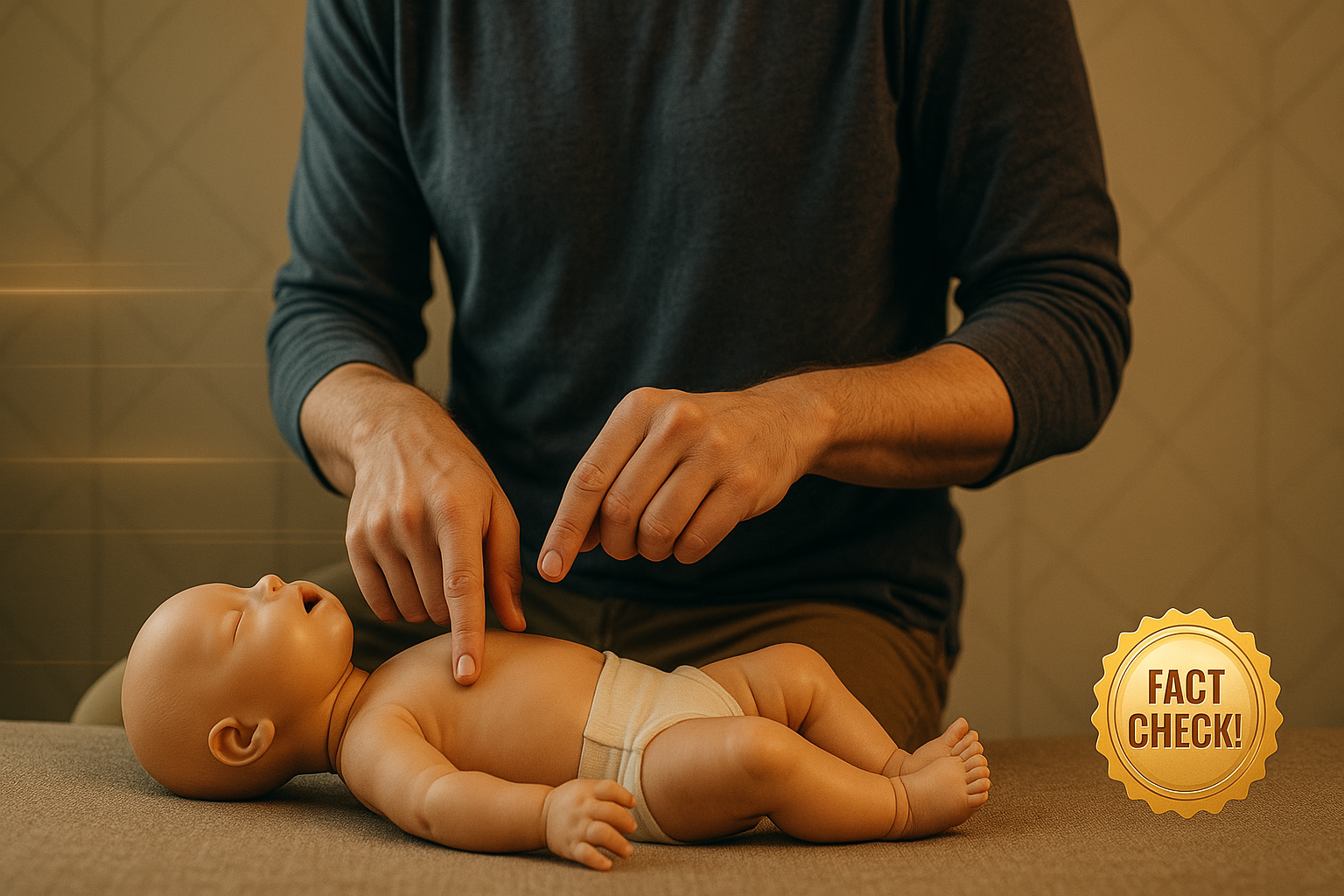
- Position Your Fingers: Place your index and middle fingers along the inside of the infant’s upper arm, between the bicep and tricep, against the humerus bone.
- Feel for the Pulse: Gently press your fingers into the arm until you feel a rhythmic throbbing. Be careful not to press too hard, as this can obstruct blood flow or make it harder to detect the pulse .
- Count the Beats: If you feel a pulse, count the beats for 5-10 seconds to determine the heart rate. Multiply the number of beats by 6 to calculate beats per minute (BPM). A normal infant heart rate ranges from 100 to 160 BPM .
If you cannot detect a pulse within 10 seconds, assume the heart has stopped and begin CPR immediately ,.
Why the Brachial Pulse Is the Best Option for Infants
The brachial artery is the gold standard for pulse checks in infants because of its accessibility and reliability. Unlike the carotid artery, which can be difficult to locate in infants due to their short necks and smaller anatomy, the brachial artery is in a consistent and easy-to-find position . This makes it the ideal choice for quick and accurate pulse checks, especially in high-stress situations where every second counts.
What to Do If No Pulse Is Detected
If you can’t find a pulse within 10 seconds, it’s time to act:
- Start Chest Compressions: Place two fingers in the center of the infant’s chest, just below the nipple line. Press down about 1.5 inches at a rate of 100-120 compressions per minute ,.
- Deliver Rescue Breaths: After 30 compressions, cover the infant’s nose and mouth with your mouth and deliver two gentle breaths, each lasting about one second. Watch for the chest to rise ,.
- Continue CPR: Alternate between 30 compressions and 2 breaths until the infant shows signs of life or emergency medical services (EMS) arrive.
The Role of CPR in Saving Lives
Knowing how to perform CPR is one of the most important skills you can have. Cardiac emergencies can happen anytime, anywhere, and immediate intervention can mean the difference between life and death. Each year, more than 350,000 cardiac arrests occur outside of hospitals in the U.S. alone. For infants, the causes are often respiratory failure, choking, or trauma, making immediate action even more critical ,. Studies show that bystander CPR can double or even triple survival rates in cases of cardiac arrest . However, only about 46% of people who experience cardiac arrest outside of a hospital receive CPR from a bystander . This highlights the urgent need for more widespread CPR training.
Why You Should Learn CPR
Becoming CPR-certified equips you with the skills and confidence to act quickly in an emergency. At CPR Training School in Alpharetta, GA, you’ll learn how to perform CPR on infants, children, and adults, as well as how to use an automated external defibrillator (AED). The training covers essential skills such as:
- How to check for a pulse and assess breathing.
- Proper hand placement and technique for chest compressions.
- How to deliver effective rescue breaths.
- When and how to use an AED.
Courses are designed to be accessible and convenient, with options for in-person and online learning. Upon completion, participants receive a nationally recognized certification valid for two years .
The Emotional Impact of Being Prepared
Knowing CPR doesn’t just prepare you to save a life—it gives you peace of mind. For parents and caregivers, the ability to respond effectively in an emergency can alleviate the fear and anxiety that often accompany these situations. In those critical moments following a cardiac arrest, your actions can make all the difference.
Conclusion: A Shortcut That Saves Lives
The ability to quickly and accurately check an infant’s pulse is a vital skill that can guide life-saving actions in an emergency. By mastering the brachial pulse-finding shortcut, you can determine if your baby’s heart has stopped in under three beats and take immediate action. But this skill is just one part of a larger toolkit. Learning CPR is the next step to ensuring you’re fully prepared to protect your loved ones. At CPR Training School in Alpharetta, GA, you can gain the knowledge and confidence needed to respond effectively in emergencies. Don’t wait for a crisis to happen—take the first step today and become CPR-certified. Because when it comes to saving a life, there’s no greater gift than being ready to act.
FAQs:
Q: Why is the brachial pulse the go-to spot for infants?
The brachial pulse is the gold standard for infants because it’s reliable, accessible, and easy to locate—even in high-stress situations. Unlike the carotid pulse in the neck, which can be tricky to find on a baby due to their small anatomy, the brachial pulse is right there on the inside of the upper arm, between the shoulder and elbow. It’s consistent, strong, and gives you the information you need fast. When seconds matter, this is the pulse point you can count on .
Q: What if I can’t find the brachial pulse right away?
Don’t panic—this is a skill that improves with practice. If you don’t feel the pulse immediately, reposition your fingers slightly and try again. Remember to use your index and middle fingers, not your thumb (your thumb has its own pulse, which can confuse you). Press gently—too much pressure can block the pulse. And if you still can’t find it within 10 seconds, assume the heart has stopped and begin CPR immediately. It’s better to act than to wait .
Q: How can I practice finding the brachial pulse before an emergency?
Preparation is everything. Practice in a calm, low-pressure environment with your baby lying on their back or cradled in your arms. Use two fingers to gently press on the inside of their upper arm, midway between the shoulder and elbow. Feel for that soft, rhythmic beat. It might take a few tries, especially if your baby is wiggly, but that’s okay—confidence grows with repetition. Practicing now means you’ll be ready when it matters most .
Q: What’s a normal heart rate for an infant?
Infants have naturally faster heart rates than adults. A normal range for babies under 12 months is 100 to 160 beats per minute. If you’re checking the pulse, count the beats for 15 seconds and multiply by 4 to get the heart rate per minute. Knowing what’s normal helps you recognize when something’s wrong—and act fast .
Q: Why should I learn CPR if I already know how to check a pulse?
Knowing how to check a pulse is just the first step. If your baby’s heart stops, CPR is what keeps oxygen flowing to their brain and vital organs until help arrives. Without it, irreversible damage can occur in minutes. Learning CPR gives you the confidence to act decisively in those critical moments. Plus, it’s a skill that lasts a lifetime—whether you’re a parent, caregiver, or just someone who wants to be prepared. Don’t wait for an emergency to learn; take a CPR class today and be ready to save a life .