On June 2, 2025, in Sandy Springs, Georgia, a 9-month-old infant was choking on a pistachio. The situation was dire. Every second counted. But thanks to the quick thinking and expert training of Sgt. William Nelson and Officer Jordan Ennis of the Sandy Springs Police Department, the child’s life was saved.
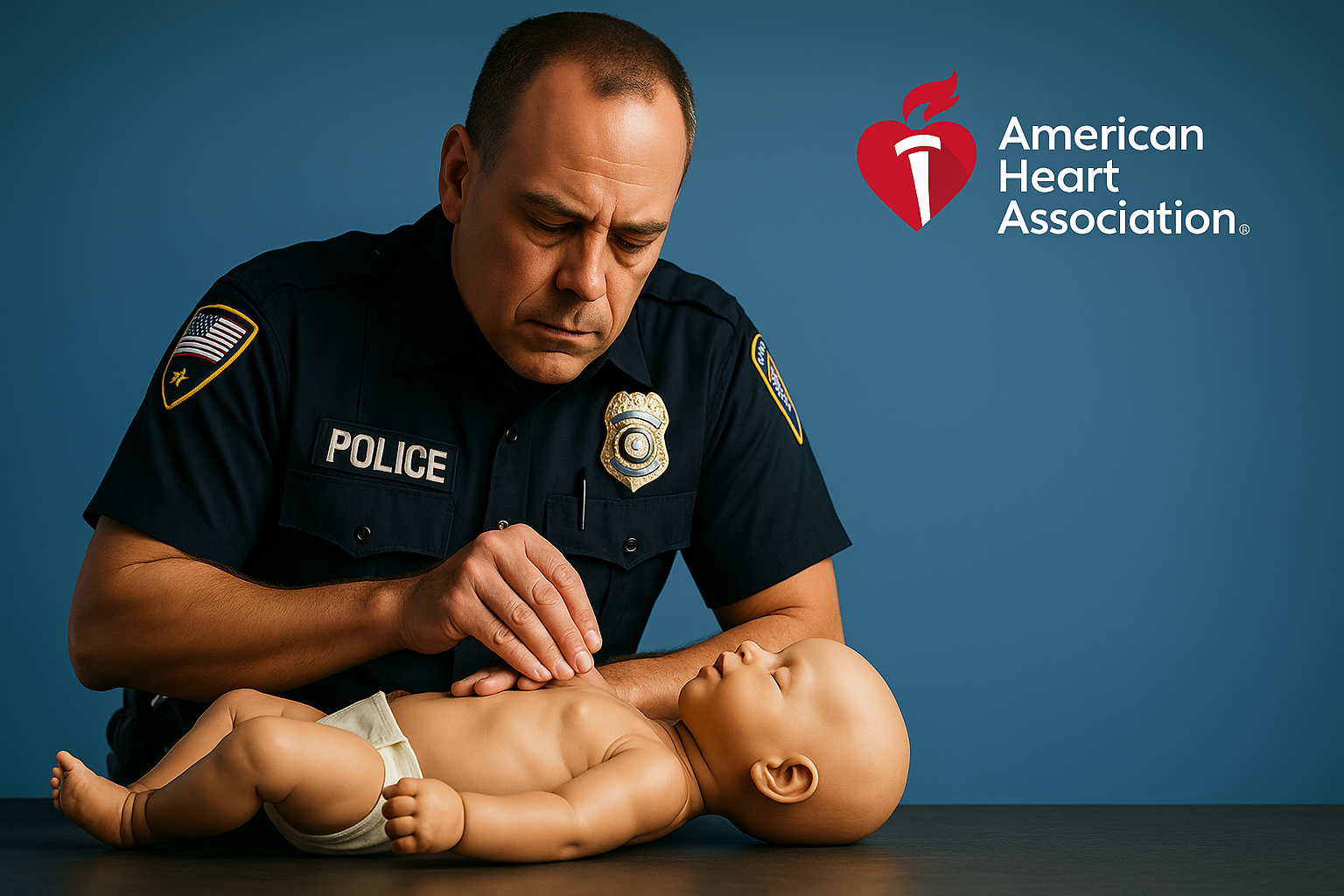
Body-camera footage captured the tense moments as the officers performed life-saving back blows, a critical maneuver for choking infants. Their seamless teamwork and mastery of first-aid techniques turned a potential tragedy into a story of triumph.
This isn’t just a feel-good story—it’s a wake-up call. It’s proof that CPR and first-aid training can mean the difference between life and death. And for CPR class instructors, it’s a golden opportunity to step up and make an even bigger impact.
Real-Life Proof: Why Infant Choking Maneuvers Are Non-Negotiable
The Sandy Springs rescue is more than a heroic tale—it’s undeniable proof that proper training saves lives. The officers’ swift actions allowed the infant to take shallow breaths before being rushed to the hospital, where doctors removed the lodged pistachio. Without their intervention, the outcome could have been devastating.
This incident validates the techniques taught in CPR training programs, especially infant-specific protocols like back blows. It’s a powerful reminder that these skills aren’t just theoretical—they work in the real world, where seconds can mean the difference between life and death.
Officer Ennis credited their success to their year-long partnership, saying, “He knows what I’m going to do. I know what he’s going to do.” Their silent, synchronized teamwork underscores an important lesson for CPR training instructors: it’s not just about teaching individual skills. It’s about preparing students to work together under pressure.
For CPR course instructors, this rescue is a golden opportunity. By incorporating real-world examples like this into their curriculum, they can inspire confidence in their students and show them the life-saving potential of their training.
How CPR Instructors Can Build Trust and Credibility in Their Communities
Parents, caregivers, and first responders are often the first line of defense in emergencies involving infants and children. But let’s be honest—many of them feel unprepared. They worry: What if I don’t know what to do? What if I freeze?
The Sandy Springs rescue is a powerful antidote to that fear. By showcasing the success of local heroes like Sgt. Nelson and Officer Ennis, CPR instructors can build trust and credibility within their communities.
Imagine this: A parent sees a flyer for a CPR workshop featuring the story of the Sandy Springs rescue. They’re no longer just signing up for a class—they’re stepping into the shoes of those officers, learning the skills that could one day save their own child’s life.
The emotional impact of this story is undeniable. It’s not just about techniques and protocols—it’s about hope, courage, and the power to make a difference. CPR instructors can leverage this emotional connection to motivate more people to enroll in courses and prioritize life-saving education.
The Hidden Opportunity: Partnering with Law Enforcement to Save More Lives
The Sandy Springs rescue also highlights an untapped opportunity for CPR instructors: partnerships with law enforcement and public safety teams.
Police officers, firefighters, and other first responders are often the first to arrive at emergencies. Their training can mean the difference between life and death. By offering tailored workshops for law enforcement, CPR instructors can ensure these heroes are equipped with the latest techniques, especially for infants and children.
But why stop there? These partnerships can extend beyond training. Imagine CPR schools and law enforcement agencies teaming up for community outreach—free training sessions for parents, live demonstrations at local events, or public awareness campaigns.
These initiatives don’t just save lives—they strengthen the bond between public safety teams and the communities they serve. And for CPR training schools, they’re a chance to showcase their expertise and expand their reach.
What CPR Instructors Can Learn From the Sandy Springs Rescue
The Sandy Springs rescue offers valuable lessons for CPR training schools looking to enhance their programs. Here’s what they can take away:
1. Realistic Scenarios Are a Game-Changer
The officers’ calm, focused response didn’t happen by accident. It was the result of training that prepared them for high-pressure situations. CPR schools should incorporate realistic, high-stress scenarios into their exercises to better prepare students for real emergencies.
2. Infant-Specific Protocols Are Non-Negotiable
The rescue hinged on the officers’ ability to perform back blows with precision. Every CPR course should include infant-specific techniques, ensuring students are ready to handle even the most delicate situations.
3. Ongoing Education Is Critical
CPR and first-aid skills can fade over time. By offering refresher courses and advanced training, schools can help students maintain their proficiency and confidence.
4. Inspire With Real Stories
Stories like the Sandy Springs rescue aren’t just inspiring—they’re educational. By weaving real-world examples into their curriculum, CPR schools can make their training more engaging and impactful.
The One Thing You Can’t Afford to Ignore: A Call to Action
The heroic actions of Sgt. William Nelson and Officer Jordan Ennis are more than a story of courage—they’re a call to action. They remind us that emergencies can happen anytime, anywhere, and that preparation is everything.
For CPR training schools, this is a moment to shine. By validating their curriculum with real-world examples, building trust within their communities, and forging partnerships with public safety teams, they can amplify their impact and save more lives.
And for individuals, the message is clear: Don’t wait for an emergency to realize the value of CPR and first-aid training. Whether you’re a parent, a caregiver, or just someone who wants to be prepared, the skills you learn today could save a life tomorrow.
So, what are you waiting for? Take the first step. Enroll in a CPR course. Learn the techniques. Be the hero someone might need.
Because when the moment comes, you’ll want to be ready.
Why This Story Matters More Than You Think
The Sandy Springs rescue isn’t just a story of heroism—it’s a blueprint for how CPR training schools can transform their communities. It’s proof that the skills taught in these programs aren’t just theoretical—they’re life-saving. And it’s a reminder that every second counts in an emergency.
Whether you’re a CPR instructor, a parent, or a first responder, the lessons from this story are clear: preparation saves lives. And the time to prepare is now.